TradeSync Pro
Copy a trade across MetaTrader 5 accounts while respecting each account’s own risk settings.
Live deployment planned.
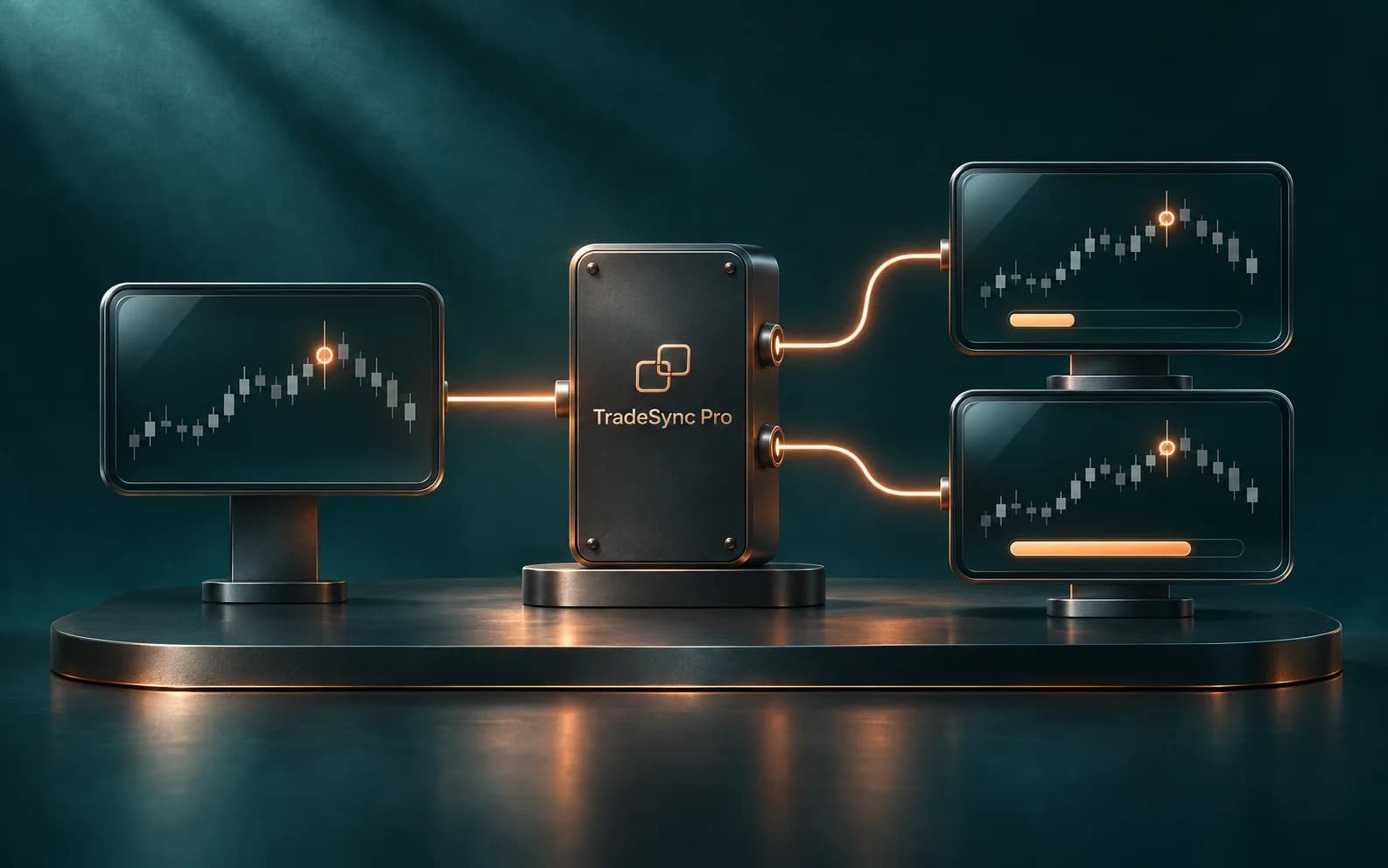
MT5 trade copying
Same signal. Different trade sizes.
The copier sizes the trade.
Each account applies its own risk limits.
Tools and Skills


Technologies
- MetaTrader 5
- PySide6
- Socket.IO
- NestJS
- Next.js
Skills Applied
- WebSocket event routing
- Broker symbol mapping
- Ticket reconciliation
- Account-level risk controls
The problem
Trade copying involves more than relaying a buy or sell message. Brokers can use different symbols for the same instrument, accounts need different position sizes, and a later close has to target the position the copier actually opened.
What I built
I built a real-time system with Python and PySide6 desktop clients, a NestJS and Socket.IO gateway, a SQL Server database, and a Next.js dashboard. The provider client watches positions in its MT5 terminal and emits open and close events. The gateway routes the signal to subscribers. Each copier applies its local rules and submits the order through its own terminal.
Why I built it this way
Route by subscription.
Socket.IO rooms give the gateway a way to deliver each provider’s signals to the right group of clients. The web dashboard handles subscriptions, account views, trade history, and admin controls.
Resolve the trade locally.
The copier maps broker symbols, applies fixed or multiplier sizing, and checks configured equity, loss, position, and price-drift limits. After opening a trade, it maps the provider’s ticket to the local ticket so a later close targets the right position.
Make reconnection observable.
Clients register again after reconnecting. Acknowledgments and trace IDs help follow a signal across the provider, gateway, and copier.
What I verified
In the documented restart smoke test, the system delivered a signal before the gateway restarted. After clients reconnected and registered again, it delivered a new signal. That test covers reconnect and new delivery. Replay of signals missed during downtime remains outside the verified flow.
Building a system that has to react in real time?
We can start by mapping what must happen when an event arrives, and what the system should do when part of the connection drops.
Book a Discovery Call